If You Don't Tell Your Story, Someone Else Will Make One Up
Every other animal on this planet lives entirely in the present tense. A dog at the water bowl isn't reflecting on last Tuesday, and a fish caught in the same net twice hasn't learned anything about nets, it's just unlucky again. We're the only species that holds the past and the future in our heads at the same time and makes sense of both. That's not intelligence exactly (plenty of animals are sharper than we give them credit for), and it's not language either (plenty of animals communicate just fine). It's something more specific: we tell stories, and stories are how we make sense of anything that doesn't come with an explanation already attached.
The gap fills itself whether you like it or not
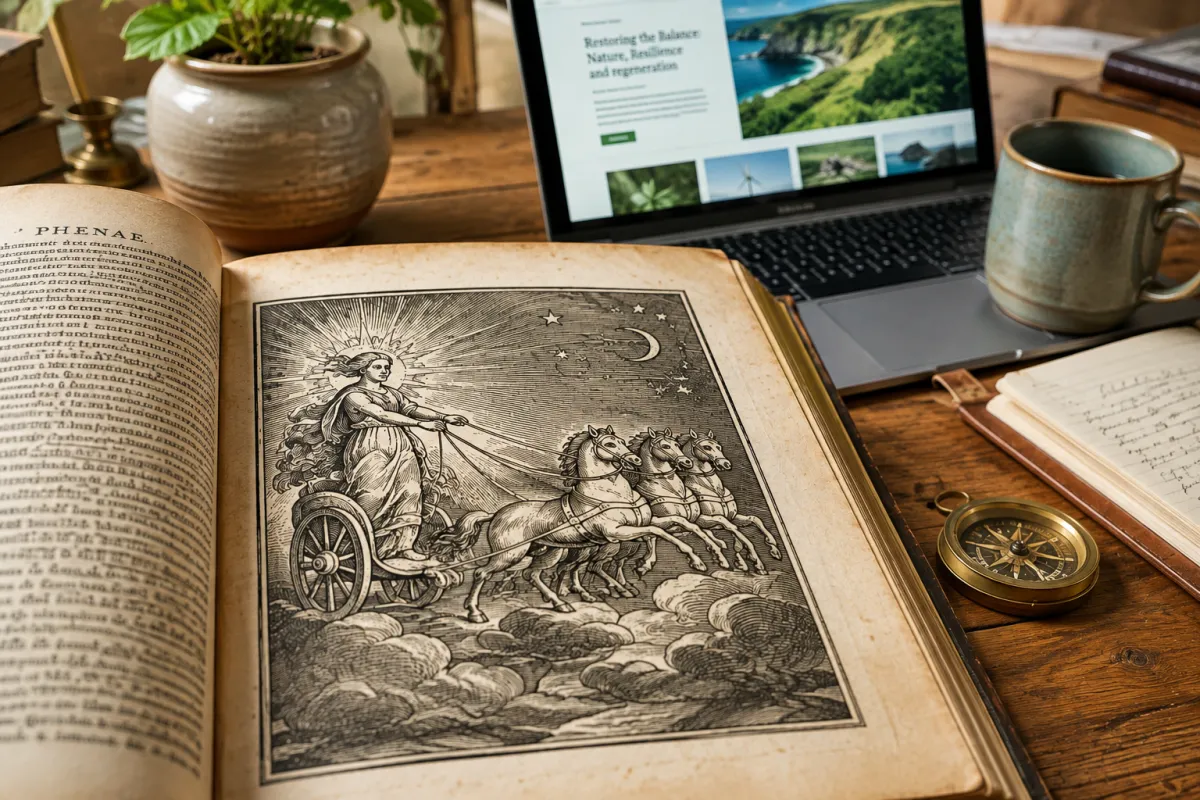
If you don't tell your own story, the people looking at what you've built don't just shrug and move on without an opinion. They form one anyway, out of whatever's on hand: your website copy, a photo from an away day, a testimonial, the word "sustainable" sitting in the same sentence as everyone else's this year. It isn't a flaw in how they think, it's the same trait that had our ancestors to help things make sense (like deciding the sun was towed across the sky in a chariot by some god or goddess), long before anyone had a real answer.
People fill gaps.
Leave the gap open and it gets filled anyway, with whatever's nearest to hand, or whatever fits someone's own experience, not with what's true.
Why this matters more when it's built on your own values
For established women running businesses built around their own core environmental values, that gap is a particularly bad one to leave empty. You didn't spot a market opportunity in sustainability. You looked at what you believe about the ocean, the soil, the supply chain, whatever the specific thing is for you, and built something that could carry the ripple you wanted to make. But "sustainable" and "values-led" are worn thin from overuse right now, and if you stop saying so yourself, out loud, in your own words, that's the version the market will file you under by default. The exact version you're most afraid of being mistaken for.
This is also why the drift happens without anyone noticing. Nobody decides to let their own story go stale. It happens because the telling stopped somewhere along the way. You got busy running the thing you built. The website copy hasn't changed since you wrote it in a hurry a few years back. What you believe hasn't moved an inch, it's just stopped being said out loud, and started being assumed instead.
An assumed story and no story at all read exactly the same.
Either way, they fill the gap themselves.
The fix isn't better copy
The instinct, once this gets pointed out, is to go looking for sharper copy: a punchier line, a more polished bio, a better-worded About page. That's rarely what is needed. The fix is saying what is true for you plainly, the thing that usually feels too personal, too big, or too risky to say out loud: WHY you started this, WHAT you believe underneath it, and what's changed in you since.
I'm not suggesting you share so much you end up feeling like you're showing your knickers.
Sharing the true why behind what you're doing, what drives you, closes the story gap on your terms, before somebody else closes it for you, badly, with the nearest cliché to hand.
Where to start
If it's been a long while since you sat down and wrote, or told someone, the true version of your own story, not the polished bio, the real one, that's usually where this begins.
Everything else flows from there.
If you want more of this kind of thinking landing in your inbox rather than stumbled on, sign up here and I'll send the next one your way, sea stories included.