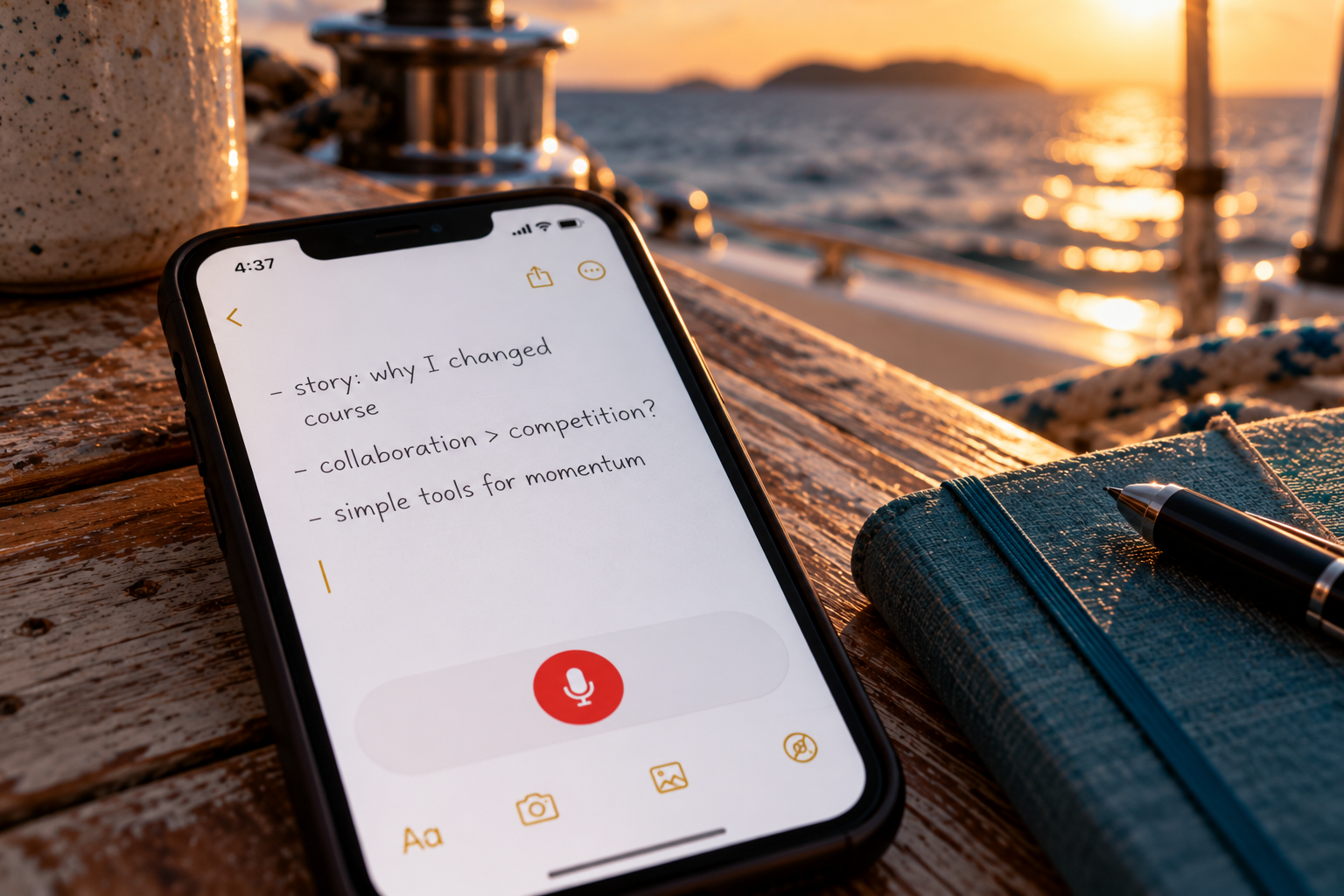
You Don't Lack Stories. You Haven't Captured Them.
Earlier this week I had a 'Yeah, Nah' day.
Not a bad day. Nothing went wrong. My brain just clocked off mid-afternoon and left a note saying it wasn't feeling creative, and could I please try again tomorrow.
The trouble is I've promised myself (and, rather publicly, everyone else) a short video every day until the end of the year, and the video doesn't care whether my brain is in. So you drag yourself off the office chair, hunt down a clean t-shirt, and show up anyway.
What I did that day was talk about the one habit that's built for exactly this kind of day. A story bank. I'll explain what that is in a minute, because first you need to know where the 100 days came from.
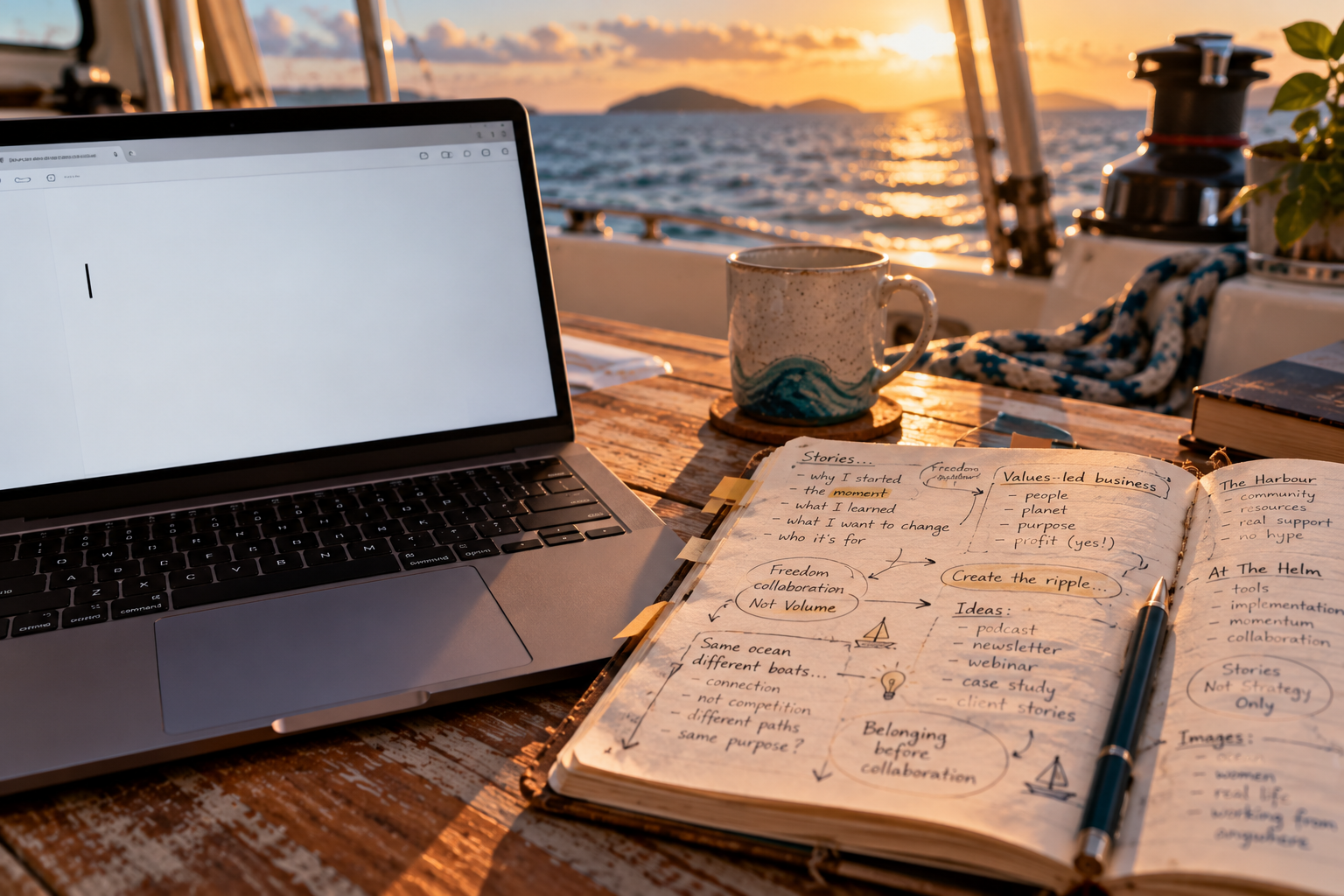
A few days before the 22 September a business bestie of mine pointed out that, on the 22nd, there were 100 days left in 2026 and dared me to pick something and stick with it. I picked You Tube shorts with a business stories theme - short video, every day, until the year runs out, filmed while I'm living aboard, somewhere on the blue water… seemed simple enough!
And the first thing I said on day one is the thing I'll say to you now.
It's not that you don't have stories. It's that you haven't captured them.
Why does it feel like you've got nothing to tell?
I know what you're about to say, because everybody says it. But I don't have any good business stories.
I'm going to stop you right there.
You've got plenty. You're just waiting for the big ones: the origin story, the launch, the award on the shelf. Meanwhile the ones that happen on an ordinary Tuesday walk straight past you, because you're busy running your business.
Say it's Thursday, two o'clock. You've promised yourself a post, or a page, or a few words for a client, and you're looking at a blank screen with a cursor blinking at you. Somewhere in the last month a customer said something that made you smile. Or a supplier changed your mind about something. Or you said no to a shiny opportunity and felt completely awesome about it. You know it happened. You can almost taste it. You just can't get hold of it, because it's gone.
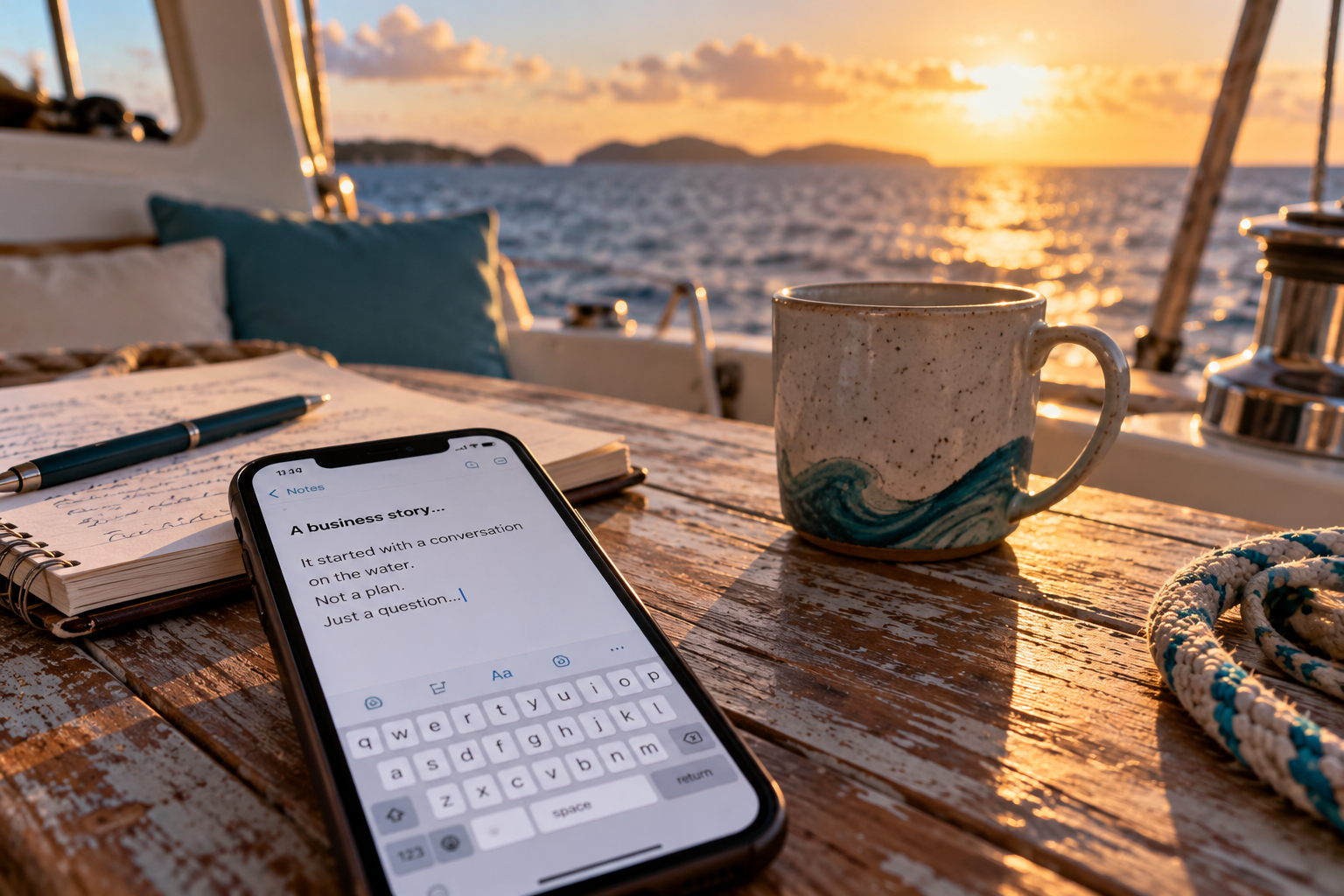
We're all pretty hopeless at holding onto things. People told stories long before anyone wrote anything down, because that's how we learned what to eat and where to go the long way round. It's what we're programmed to learn from. It's also why a good story is so much easier to remember than a good fact.
So what do most of us do when the cursor blinks and the story's gone? We reach for something manufactured. And that's how a business built on real conviction ends up sounding like everybody else, which is the very thing you built it not to do. (If you want the long version of what happens when you leave that gap empty, If You Don't Tell Your Story, Someone Else Will Make One Up has it. And if you've ever wondered why the AI version doesn't sound like you, Why your AI sounds nothing like you is the one.)
Your own stories, your way. Not something manufactured.
What's worth capturing?
Anything that moves you. That's the whole test.
The next time you hear something and think oh, that was important, or that was really interesting, or my clients would want to hear that, or it simply lights you up, grab your phone. Write it down. Open a note, use a notebook, record a voice memo, or talk to your phone like a slightly unhinged person on the street. Nobody's checking.
It doesn't have to be finished or polished or even a proper sentence. You're not writing the story. You're pinning it down so it can't float off.
Capture it now. Work out what it's for later.
What do you do with a hundred of them?
Do it for 100 days and you'll have 100 business stories. Relevant to you, relevant to your clients, in your own words.
Then the next time you think I need a story about this, you're not staring at a blank page. You've got a library. And on the yeah, nah days, which will come, you open it, pick one, and the pressure's gone. That's all a story bank is.
Yours won't look like anyone else's, either. Two women in the same field will capture completely different things, because they're noticing different things. Same ocean, different boat. (Same Ocean, Very Different Boat goes into that.)
There's a second thing too, and it usually turns up after a few weeks. Read back what you've been writing down. It's rarely random, and the pattern in it is a very good start on who your business is really for and how you sound when you talk about it. If you're not sure why that matters, You Don't Need to Be Famous, You Need to Be Known by the Right People is a good place to carry on.
That's the work I do with women whose businesses are built around what they believe: finding their own stories, shaping them, and getting them out into the world, using a framework I call Anchor, Align, Amplify. Finding comes first, and capturing is how finding starts.
What you notice is nearly always what you care about.
So open a note on your phone. Today. Put the last thing that made you stop at the top of it.
You've had the stories all along. Now you can start keeping them.
If you'd like some company while you work out which of them are yours to tell, the free masterclass series is a good place to start. Sea stories included.