Why the Story Behind a Business Makes People Want to Support it
A few nights ago I walked into a beach cafe and decided what it was before I'd sat down.
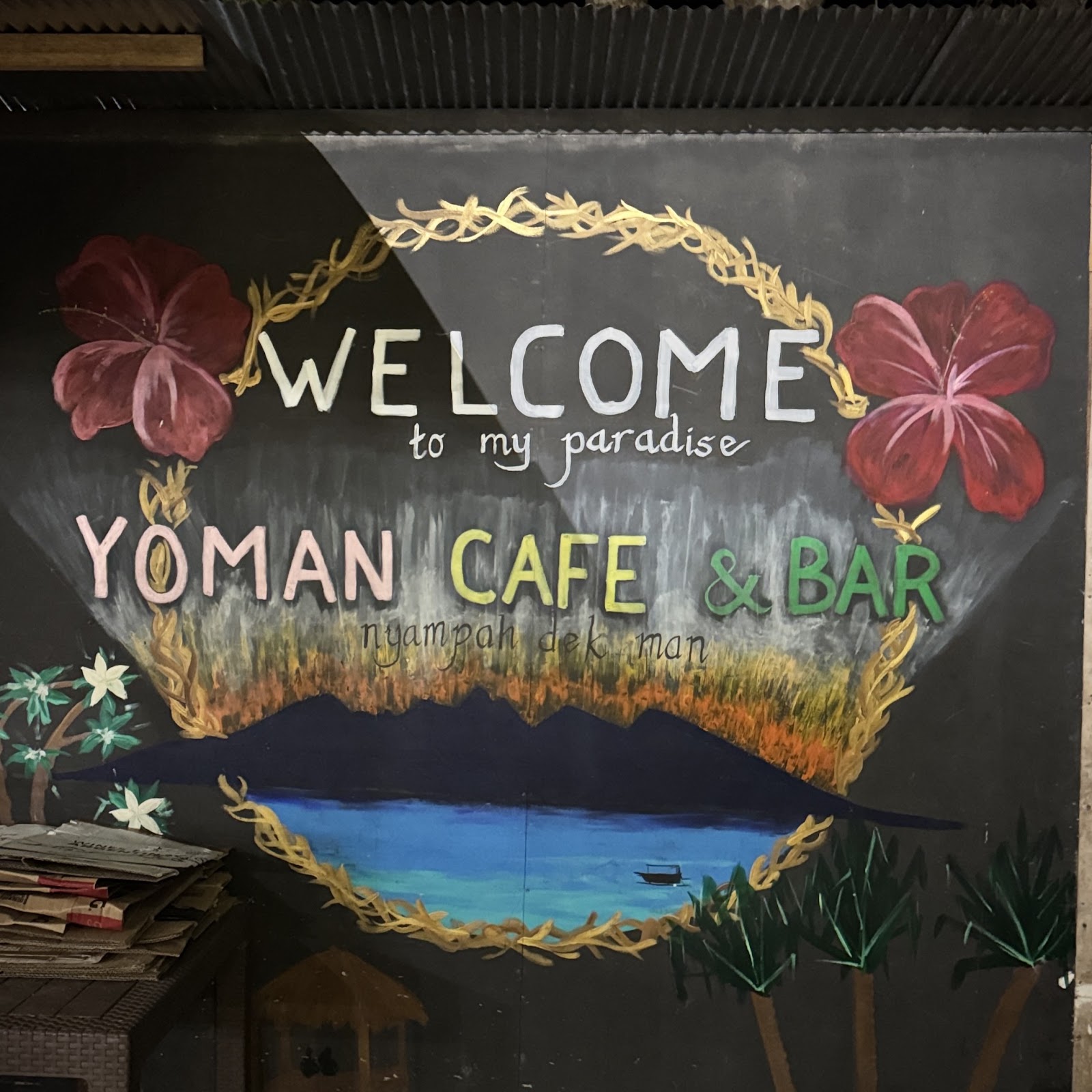
The sign said Yoman, and my brain turned that into "yeoman." A yeoman is a landowner, a step below the gentry. It's also a navy clerk, and a ceremonial guard. The cafe was on the sand, right next to where we were anchored on our boat, so I filled in the rest myself: nautical, old-world, a bit serious about itself.
I was wrong about every part of it.
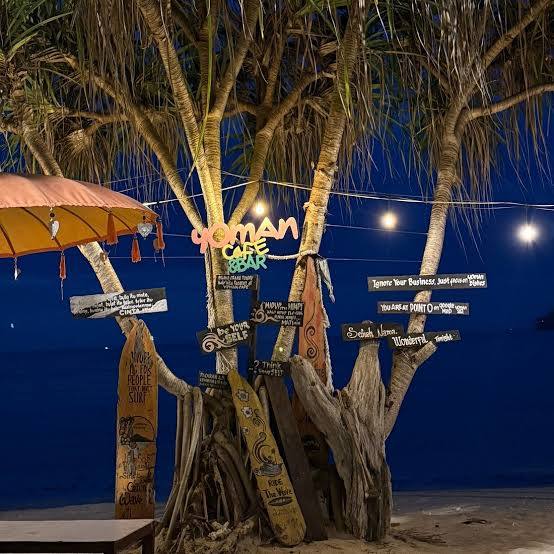
I mentor women whose businesses are built around what they believe about the planet, and most of what we work on is how they tell their own stories. Which is exactly why this cafe has been on my mind. It shows, better than anything I could have invented, what a story does for the people who find your business.
What the sign said
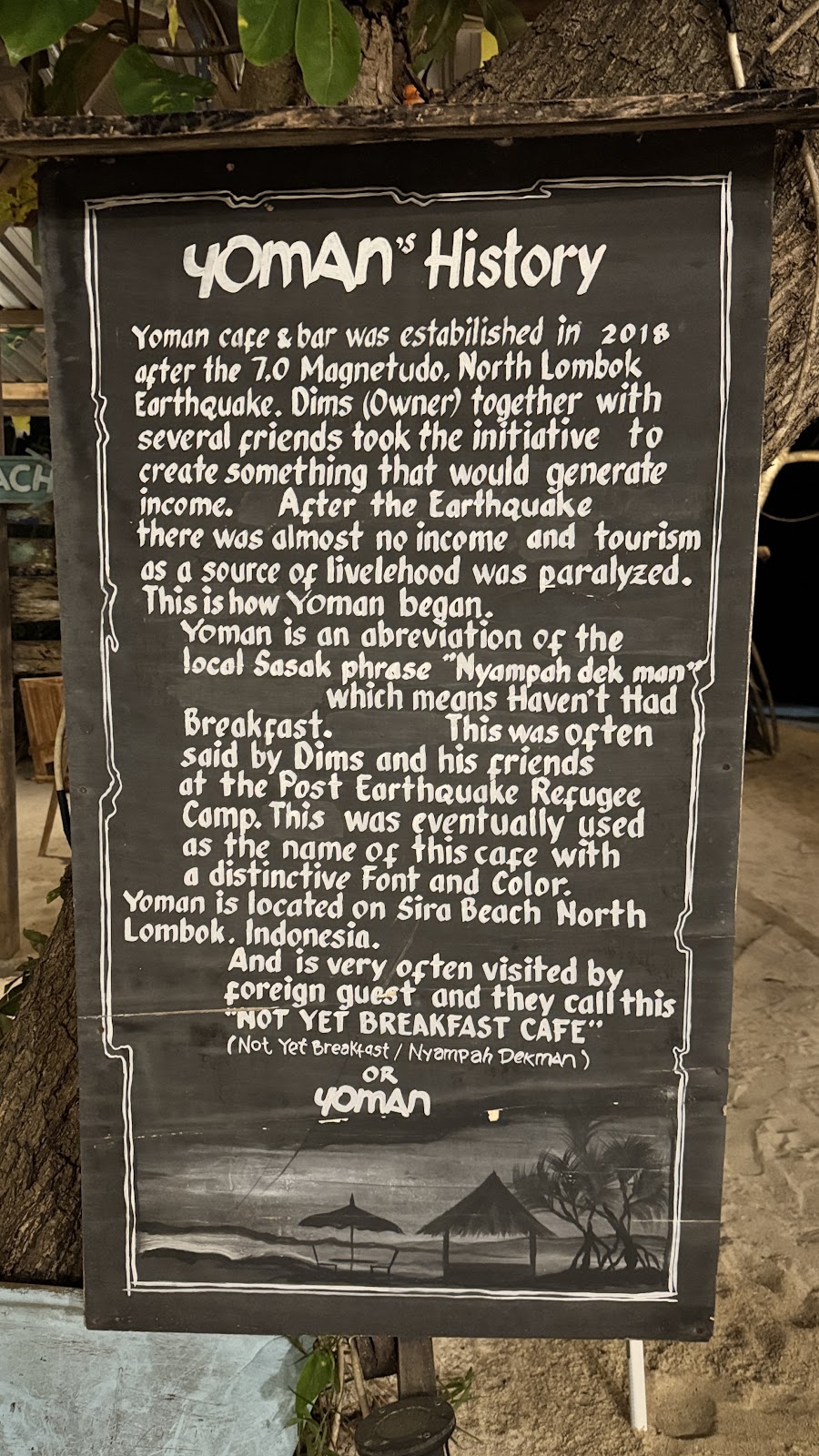
There was a sign on a tree, and I'm glad I read it.
Yoman is on Sira Beach in North Lombok, Indonesia. It started in 2018, after a 7.0 earthquake almost flattened the island. Tourism, which the area earned its living from, stopped. The owner, Dims, and a group of friends were in the earthquake refugee camp, and the phrase they kept saying (and hearing) was Nyampah dek man, a Sasak phrase that means "haven't had breakfast yet." It gets abbreviated to ‘yoman’ (I have no idea why) so that became the name. Visitors call it the Not Yet Breakfast Cafe.
No navy clerk. No landowner. Just hungry friends in a hard place, saying what was true for all of them that morning.
What the owner told me
I asked Dims what it was like after the earthquake. There was nothing here, he said. All they had to start with was what had washed up on the beach, and the furniture's still recovered wood. They wanted somewhere to bring the community together. Then they had to feed everyone, and one thing grew from the next.
He chose not to bring the food in from Bali, the neighbouring island, because the point of the cafe was to put money back into a place that had been flattened. It's cheaper to buy local too, but that wasn't why. Years of slow growth, and holding the line against tourism pressure, which he's found hard at times.
The cafe was exactly the same cafe before I knew any of this.
You don't need a story for your business to matter. You need one for people to back it.
Here's where I'd push back on a common line, the one that says people won't value your business until they know your story. They will. Plenty of people would enjoy Yoman and never read the sign.
What changed was me. I wanted to stay, buy the extra round, leave a decent tip, and tell people about it (which is what I'm doing now), because I understood what Dims and his team are trying to do.
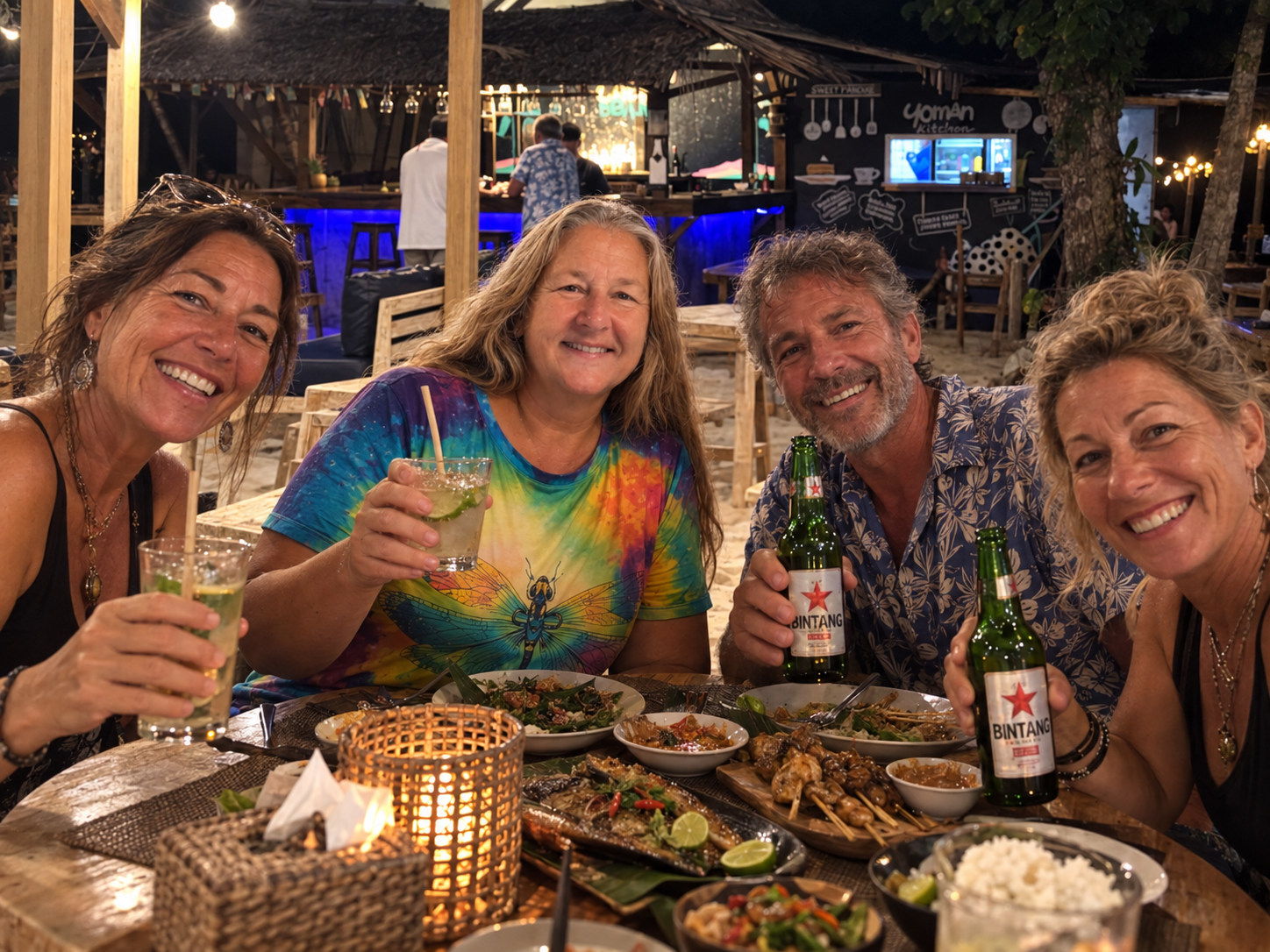
A story doesn't prove you're good. It gives the right people a reason to come closer.
It's the same reason I wrote about If You Don't Tell Your Story, Someone Else Will Make One Up a while back. When you leave the gap empty, people fill it. I filled Yoman's with a navy clerk.
Where to start with your own
If you run a business built around what you believe, you have a Yoman. Probably several. Who you buy from. What you turned down. Why you do what you do for the people you do it for.
Start with the question I asked Dims. What was it like at the start? Whatever you'd say to someone across a table is the first draft of your story, and it's nearly always better than the one on your About page. If you're thinking about who it's for, You Don't Need to Be Famous, You Need to Be Known by the Right People is a good place to carry on.
Most of us are good at listening to other people's stories and not so good at telling our own.
If you'd like help finding what goes on your sign, get in touch. I'd love to hear it, sea stories included.